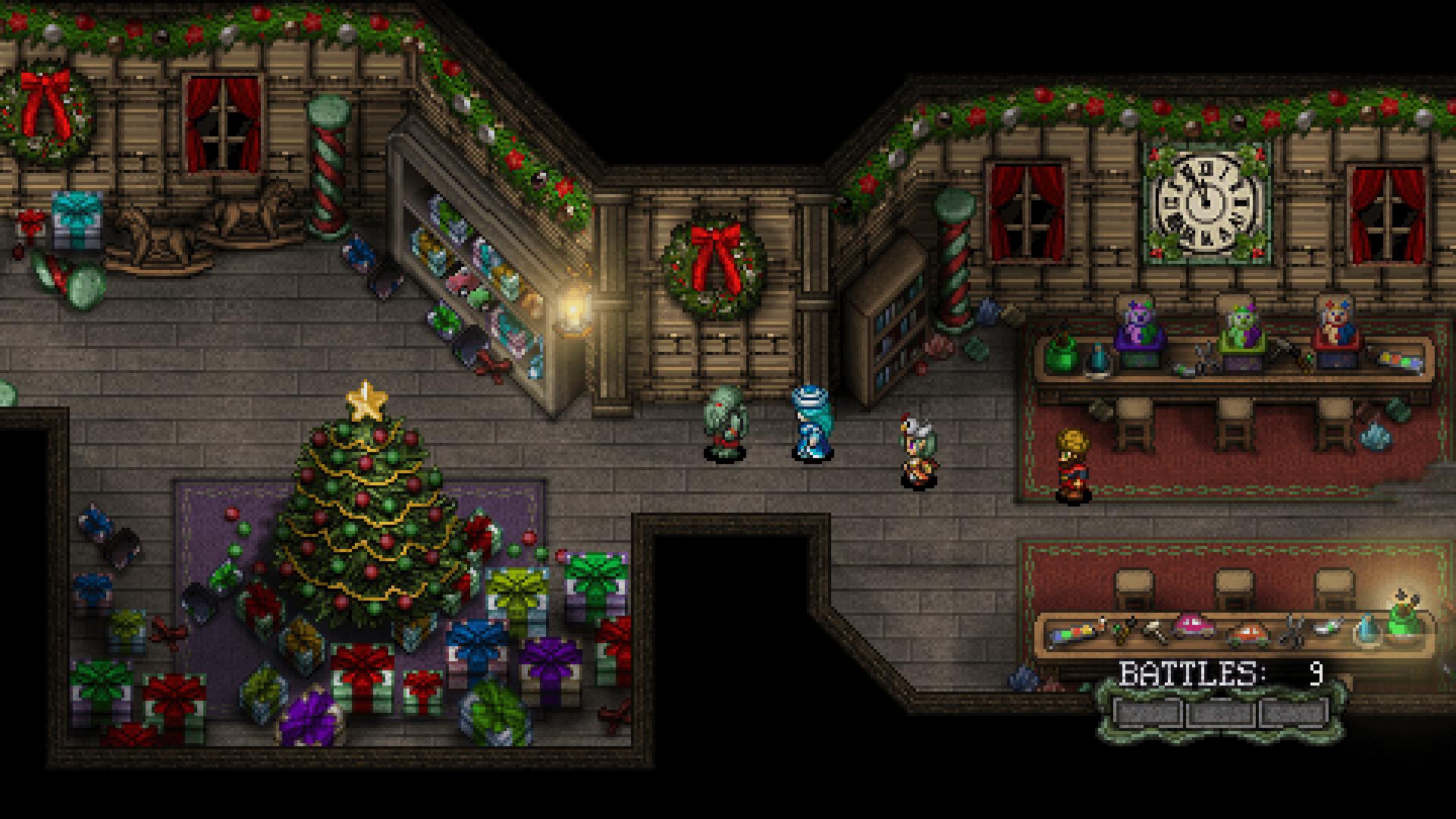
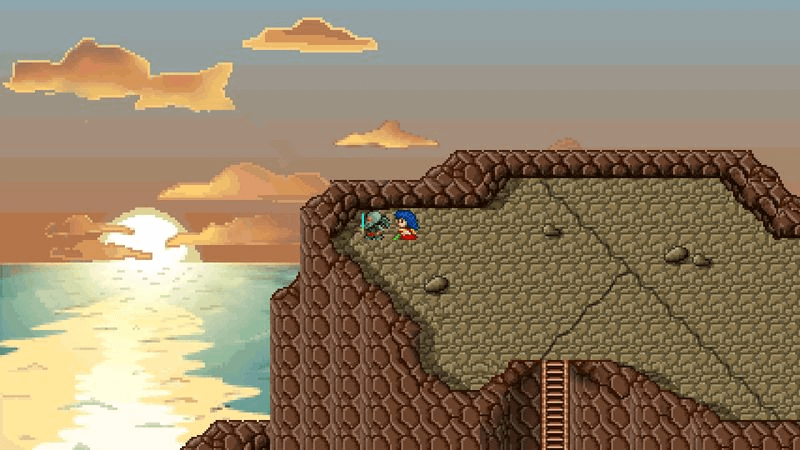
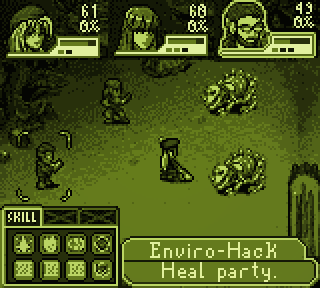
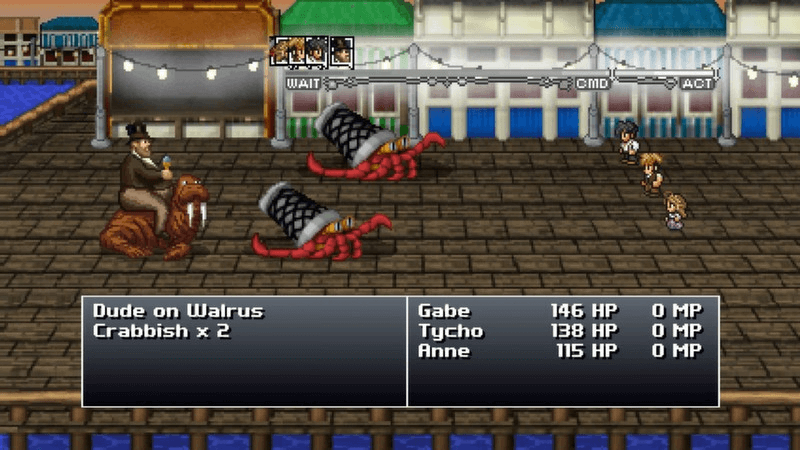
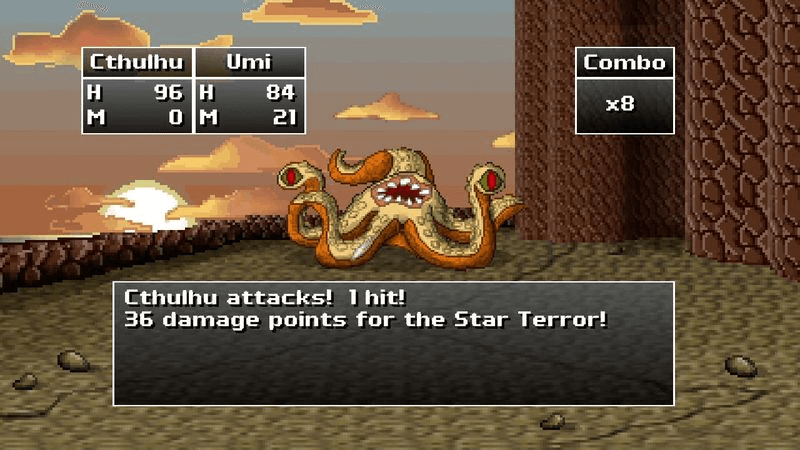
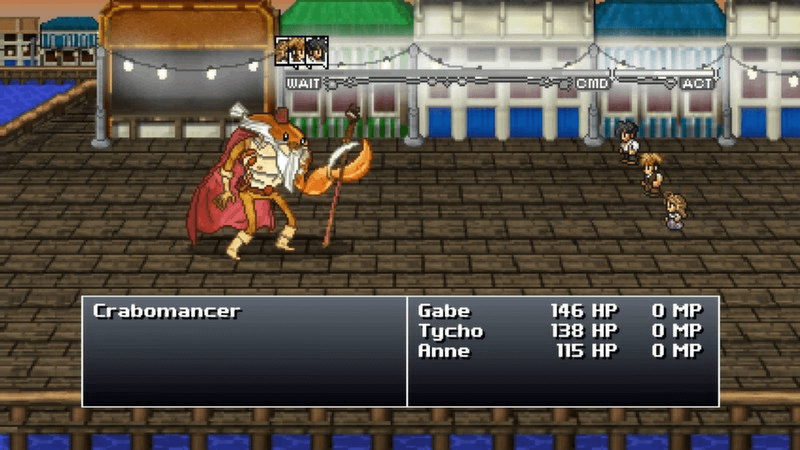
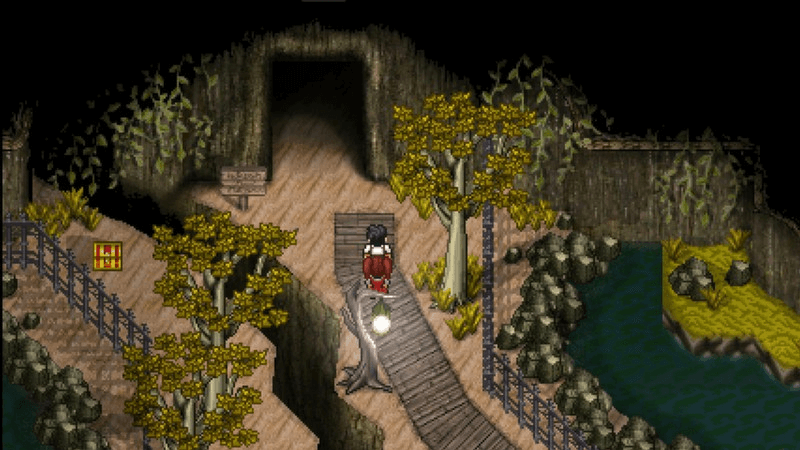
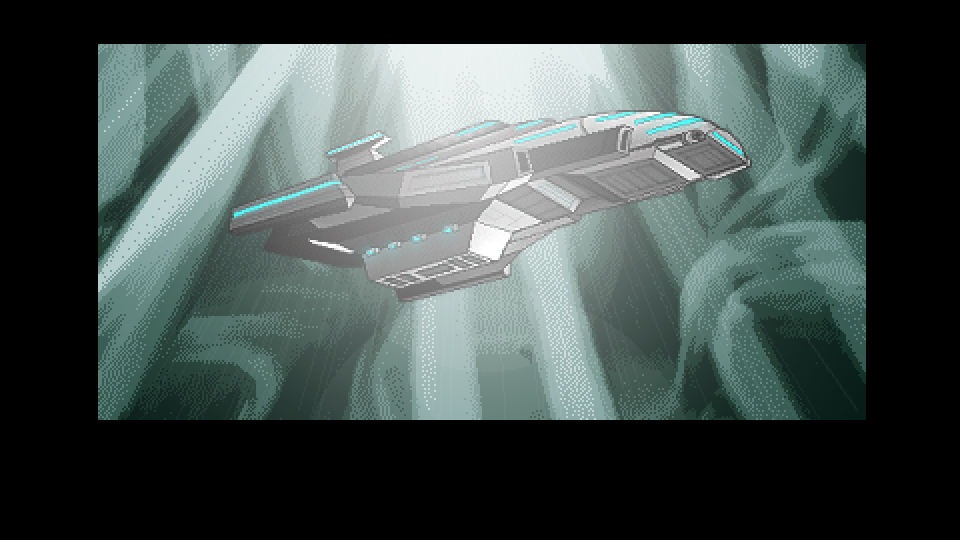
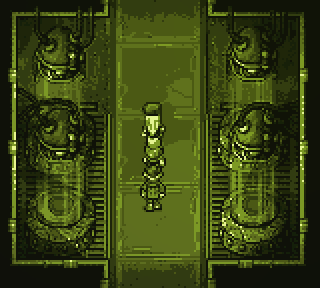
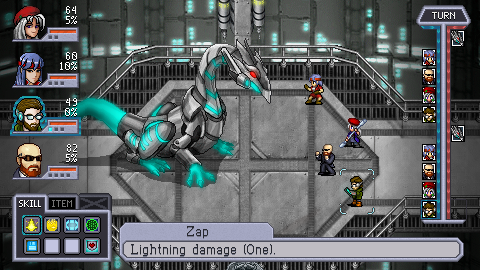
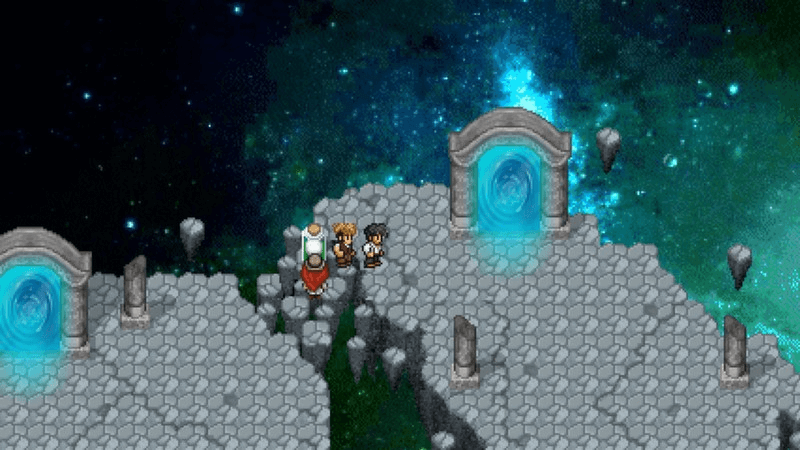
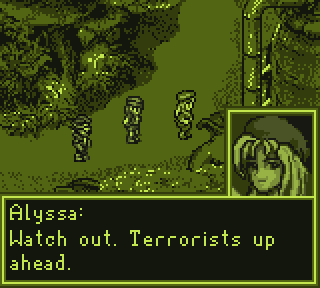
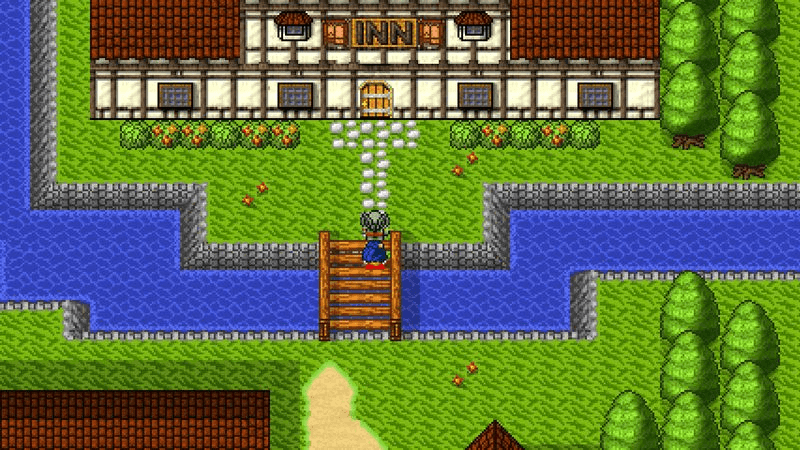
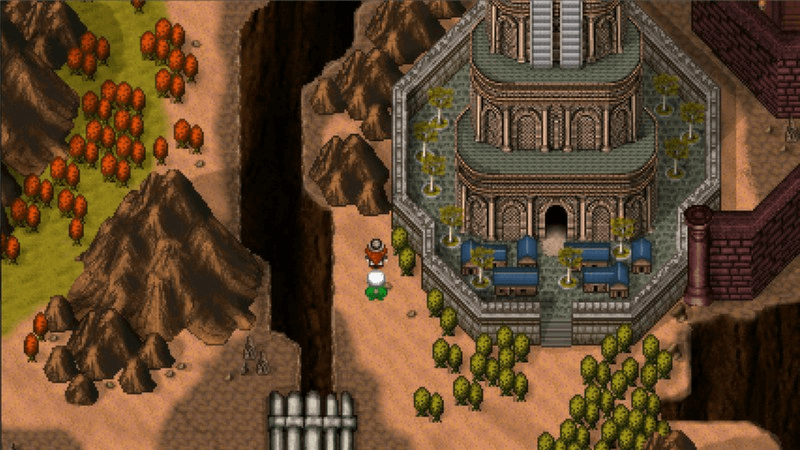
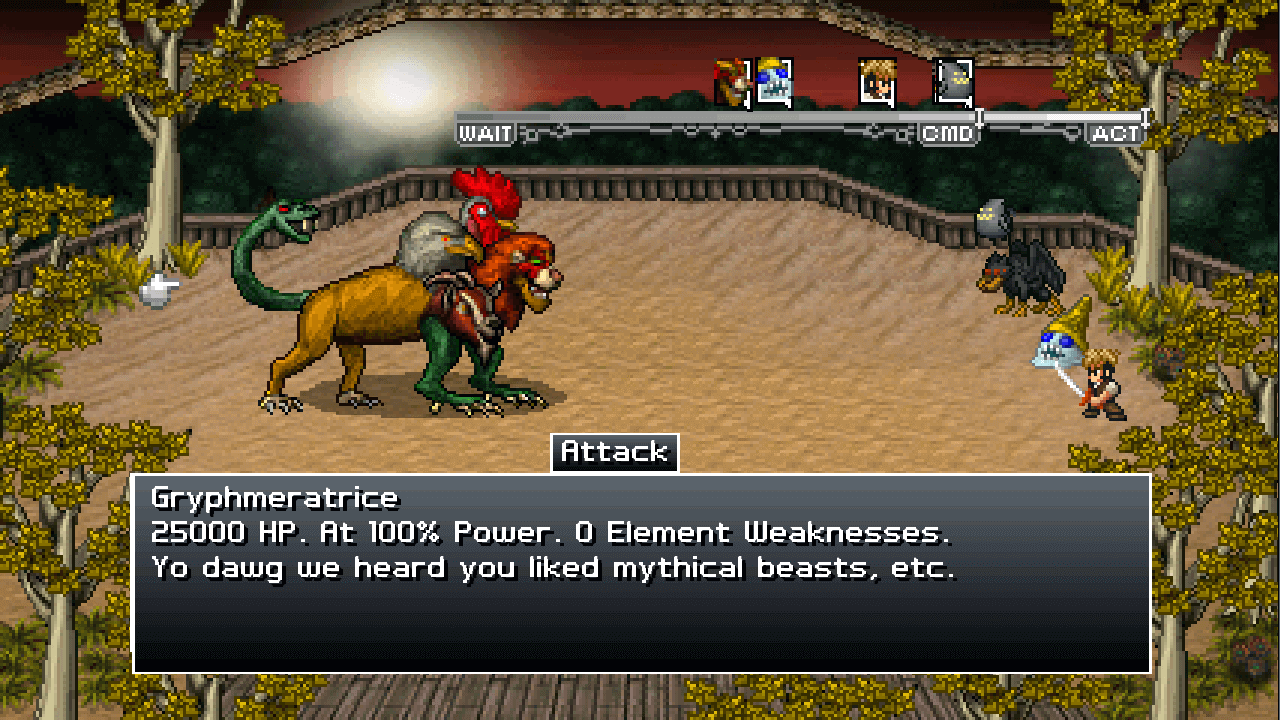
Zeboyd Games is pleased to announce that the Cthulhu Saves the World + Breath of Death VII combo pack ($3) has sold over 100,000 copies on Steam since its release on July 13th, 2011.  This milestone was achieved during the Steam Halloween sale, less than 4 months after the game’s release on Steam.

In contrast, on the XBox Live Indie Games (XBLIG) service, Zeboyd Games has sold over 20,000 copies of Cthulhu Saves the World (240 MS points = $3) and over 55,000 copies of Breath of Death VII (80 MS points = $1). Cthulhu Saves the World was released in December 2010 on XBLIG and Breath of Death VII was released in April 2010.

We are ecstatic at the amount of success we’ve seen since releasing our games on the PC. The days of worrying over whether or not we could support our families while making games we would want to play ourselves are behind us. Counter-intuitive though it may be, there is obviously a definite audience for quality console-style RPGs that are aggressively priced on the PC.

We are very appreciative of all the support we’ve received from our fans and from Steam and hope to continue making quality games at low prices for you to enjoy for years to come. We are very excited to be working on Rainslick Precipice of Darkness episode 3 in conjunction with Penny Arcade and hope you have a blast with it when it comes out in 2012. And beyond 2012, we have many intriguing ideas for new games that we think you’ll enjoy, both RPGs as well as games from other genres.

Once we’re done with our current projects and have some money saved up, I’d love to take a few years, maybe hire an extra person or two, and make something truly amazing – an RPG that could stand toe to toe with the classics of the past.

Now I have a pretty good idea of what I’d like in a JRPG, but I was curious to see what others thought on the matter and so I posted the following question on my twitter account: “JRPG fans – what would your ultimate JRPG be like?” I got dozens of responses – many from individuals who work in the video game industry – and the results were interesting.

Below, I present to you the 5 most common elements I saw, in roughly their order of popularity.

1. Control of a Well Written Plot – This was by far the most common element I saw in the responses. Fans want a strong, well thought out plot, but they also want to have some say over what happens.

2. Turn-based battle system – There was a lot of variety in exactly what kind of battle system they wanted (the Grandia, Shin Megami Tensei, and Final Fantasy series were all brought up many times) but one thing was clear – many fans miss the days when turn-based combat was the norm and not the exception.

3. Complex, intricate LV-Up system – Job systems and skill systems were especially popular.

4. Exploration – Players wanted huge worlds with the freedom to explore. No wonder Xenoblade and popular Western sandbox RPGs like Fallout and Skyrim review so well!

5. More adult plots – Fans that grow up on JRPGs in the 80s, 90s, and beyond are now adults and want to be treated as such.

So taking this feedback and my opinions into consideration, here’s a rough premise I came up with.

World is a mix of fantasy & science fiction. Main city in the world is a dystopia ala Midgar that wouldn’t look out of place in Shadowrun. Outside the city, there’s a dangerous wilderness that’s mostly unknown to the civilized world. Main player is a computer that gained sentience and corporeal form (can choose to be either male or female). Main plot has various branches – do you side with those who would use your powers? Go on a quest of self discovery? Seek the quiet life that no one will let you have? There will also be various optional major plot lines ala the Elder Scrolls series guild quests.

Party composition and party member relationships would have an effect on dialogue, plot, available dungeons, etc. None of this “Chie has pledged her undying love to you but her dialogue and actions are still exactly the same in all major plot scenes” nonsense.

Combat will be turn-based and probably loosely based on the Grandia series. LV-Up system would be kind of like the Materia from FF7 except each character has one exclusive Materia that can not be unequipped and individual Materia can be customized ala the Sphere Grid from FF10.

Lots of exploration possibilities. To keep difficulty in control without removing the player’s feeling of progression, each area will have a possible LV range however the LV choosen will be based on things like the player’s progression when they first go to that area. For example, an early area might have a LV range of 1-10 so if you go there right at the beginning, enemies will be permanently locked into LV1 and would stay that way for the entire game. However if you didn’t go there until the end of the game, the enemies would be locked at LV10 (even if you’re say LV50 – still want to make the early area feel like an early area). Conversely, a late game area might have a LV range of 50-60 so if you went there early, it’d get locked into LV50 which might still be way more than you could handle.

2D pixel art and an awesome soundtrack. ’cause that’s just how we do things here.

And now for a quick Q&A:

Will this actually be made? Beats me. Keep in mind that we’re not going to be starting any new projects for a while (gotta finish what we’ve already begun first!) and I scrap ideas almost as quickly as I come up with them so there’s no guarantee this idea will ever turn into anything.

Why do you keep mentioning other games? Don’t you want to be original? This isn’t even at a design document state. Mentioning other games is a quick and easy way to give everyone a general idea. Once a game is further along, that’s when you can start talking details and how to make it more unique.

Aren’t you afraid someone else will steal your ideas? Not particularly. They’re just ideas. Taking these ideas and turning them into an actual high quality game would take a talented team years of work .Plus these ideas are just a starting point – if you gave these ideas to two talented designers and teams, you’d end up with two drastically different games in the end.

Cubixx HD Review

As the name implies, Cubixx is basically the classic arcade game, Qix, but in 3D (aka a cube). For those unfamiliar with Qix, it’s a simple game where you try to capture areas of the board by creating shapes. Once a shape is drawn, you’re safe, but if an enemy touches a shape while you’re creating it, you die.

I didn’t expect a whole lot from Cubixx but I was surprised at just how much the basic Qix-style gameplay has benefited by the addition of a 3D board with multiple sides. In Qix, the basic strategy was to make a tower of little shapes until you were close enough to finish off a much larger shape. Effective? Yes. Boring? Also yes.

In Cubixx, this strategy has been completely nullified by the scoring system. By starting a line on one side of the cube and continuing it onto multiple sides, you gain a multiplier that drastically increases your score. This small addition completely changes the dynamic of the game – rather than being a slow game of attrition, Cubixx is a fast paced score attack game.

Throw in a a bunch of enemy types (the meteor showers being my favorite), lots of power-ups, several different gameplay modes, various challenges, and leaderboards galore and you have a very intelligent and fun reworking of one of gaming’s less popular old classics. Highly recommended.

Cubixx HD is available for the PS3 via the PSN for $10.

Serious Sam: The Random Encounter

Sometimes there is truth in advertising. Serious Sam: The Random Encounter (SS:TRE) is a Serious Sam game – backpedaling while shooting at ridiculously large groups of enemies is the norm. And there are a whole lot of random encounters – you spend most of your time in them.

Although Serious Sam: The Random Encounter is an RPG parody, it’s not an RPG. There are no stats. No XP. No LV-Ups. No detailed equipment system. Next to no story. Very little dialogue.

What Serious Sam: The Random Encounter does have is a very original, very fun battle system. Your team of 1-3 heroes backpedals on the right side of the screen while hordes of enemies approach from the left. Every 5 seconds, the action pauses allowing the player to enter in commands for each hero – aiming weapons, switching weapons, or using an expendable item. After all commands have been entered, combat resumes and the player can move up and down to dodge attacks and better aim their attacks. Repeat until one side is defeated.

The battle system is one part shmup, one part strategy game and is a complete blast. Each weapon has its own strengths and weakness and often its own aiming system so learning how best to use each weapon and when to use them is key to the game’s strategy.

On the downside, Serious Sam: The Random Encounter is incredibly short. The entire campaign took me a little less than 90 minutes to complete and that’s with having to restart a couple levels a few times because I ran out of lives. After completing the campaign, there’s a score-focused endless mode to play where you can see how many battles you can win before running out of lives, but even with that bonus, most players are unlikely to play the game for much more than a couple hours.

Still, I’d rather have a short and fun game than a long and tedious one. Here’s hoping that someone takes the wonderful framework than Vlambeer has created here and expands it out to a bigger, more complex game. In the meantime, enjoy your backpedaling carnage.

Serious Sam: The Random Encounter can be bought on Steam for $5.

I’m pleased to announce that for the Cthulhu Saves the World + Breath of Death VII combo pack is part of Steam’s annual Halloween sale! For a limited time, you’ll be able to pick up both of our RPG for a mere $2. Already own it? No problems – buy a copy to send to that girl you really like who still doesn’t know you even exist! Nothing says I love you like an Eldritchian parody RPG!

A while ago, I entered a design document into a game design competition. You know the type – one of those contests promising to pay big bucks for innovative fun designs and then the winner ends up being a Zuma clone (note, this wasn’t the contest I entered). Anyway, I’ve since moved on and though I think there are several cool things in the design that would be fun to work on, there are many more game ideas that are higher up on my priority list (plus, you know, finishing and releasing the game we’ve already announced) so I doubt I’d ever get around to actually making this game so I figured I’d put it up here for everyone to check out. Hopefully, you find it amusing. And hey, if you want to use any of the ideas presented in this document in your own game projects, feel free – saves me the trouble of making the game myself. :)

I present to you: Silver Screen Hero!

I received a copy of Jamestown to review several months ago and I’ve been at a lost as to how to review it ever since. Jamestown is a vertical shmup with 5 main levels, 4 ship types, several difficulty levels, leaderboards, a challenge mode with stuff like “Dodge a million bullets for X seconds,” local co-op, and various unlockables. There aren’t really any gimmicks or unusual game mechanics to talk about. The strangest thing about the game is its setting which is a mismash of American Colonial and OUTER SPAAAACE! There are no major flaws to complain about. There really isn’t a whole lot to say about the game except this…

It’s awesome.

The levels are expertly crafted, the graphics feature intricately detailed 2D art that reminds me of SNK at their height, the music is fantastic, and it’s just a whole lot of fun.

If Jamestown had been released in the 90′s as an arcade game, it would have been considered one of the classics of the era. It’s one of the best vertical shmups I’ve had the pleasure of playing.

Jamestown is available on Steam for $10.

Dark Souls has gotten a lot of attention for featuring an extremely high level of difficulty, however it would be unfair to dismiss it as just another masochistic game. In this article, I examine nine areas that Dark Souls excels in and discuss how we can apply those lessons towards improving game design.

Level Design – Dark Souls has some of the most complex sets of level designs I’ve ever seen in a game. Each level typically has one main path but countless detours, secret areas, and shortcuts, and is usually connected to a number of other levels at various points as well. Despite the high level of complexity and my horrible sense of direction, I’ve rarely gotten lost in the game DESPITE the complete absence of an in-game map! The fact that the game can maintain such a high level of map complexity without completely confusing the player is a testament to the skill of the developer’s ability to create memorable areas, both through the visual style and through the memorable events that happen therein.

One aspect of the level design that bears special mention is the game’s use of 3D space. The game is full of stairs, inclines, ladders, and cliffs. Rarely a minute passes where the player isn’t going up or down in some way. Even when there are not actual parts of the level above or below the player, there are always interesting things to look at in all directions such as the cavernous roof with a small opening for strange light in the top of the cave that you’re exploring or the valley below the cliffside undead village that you’re fighting for your life in.

If you’re a professional level designer, you need to study the level design in Dark Souls to gain a better understanding of how you can improve your craft. If you’re making a 3D game, take advantage of that fact and build your levels in every direction, not just x & y.

Sense of Scope – This aspect goes along with the level design but is sufficiently important to be worth discussing individually. Not since Shadow of the Colossus came out in 2005 have I seen a game that has such a great mastery of portraying the scope of its world to the player. While you’re exploring an area in Dark Souls, you might see a castle on the distant horizon. In most games, that castle would just be a nice piece of background art that the artists drew ’cause it looks pretty. Not in Dark Souls. Keep playing and no doubt before too long, you’ll actually be exploring that castle (and have found something new on the horizon that you’ll explore later).

This sense of scope also applies to the game’s enemies. There are moments where you might see something in the distant that’s so far off that you’re not even sure what it is. Get a little closer and you may realize to your abject horror that the huge thing you see is alive and will probably destroy you without a moment’s thought if you get any closer.

By portraying a sense of scope to the player, Dark Souls makes its world, enemies and quests feel epic in a way that simply having a long game would not accomplish. Dark Souls does this through its use of levels and enemies, but there are other ways to give a sense of scope. For example, in the old SNES RPG, Lufia, the game begins with a playable introduction that lets the player use a group of legendary heroes. By seeing their power and the power of their foes firsthand, it gives a clear sense of the range of power in that world right from the start.

Enemy variety – It boggles my mind how so many big budget games today can have huge worlds, and then fail to populate them with interesting enemies. Take Deus Ex: Human Revolution for example. It’s a good and often great game, but in the first 6 hours of playing it, I only saw one real enemy archetype – guy with gun. Sure, some of the guys were walking and others were standing around, some of them were soldiers and others were punks, some had sniper rifles and others had machine guns, but for most practical purposes, the vast majority of enemies were very similar to each other, both visually and mechanically. How boring.

Not Dark Souls. Just in the first hour or two, I saw skeletons that won’t stay dead, ghosts that could only be hurt under specific conditions, undead soldiers with a variety of weapons (including fire bombs), poisonous rats, well armored knights, and some impressive bosses. Sure, many of the enemies were fantasy archetypes, but they each had their own distinct visual style that set them apart and more importantly, they behaved differently from each other thus resulting in more varied gameplay.

Environmental combat – Walk to an arena. Have enemies spawn. Kill the enemies to unlock the next arena. Repeat. Bleh.

When did we forget that the environment can be a great way to add variety and depth to combat? Exploring a tight passage way in Dark Souls? Guess you’d better put away that huge broadsword since its wide swings will just bounce off the walls. On a narrow ledge high above a deadly fall? Be wary of using fast, weak weapons because you might just combo yourself into an early grave. Better yet, you might decide to knock off that tough enemy off a cliff and avoid an otherwise hard fight.

Just fighting can get old. Add non-enemy factors like the environment to keep your combat engaging throughout the entire game.

Death matters – Stuck on a relatively hard part of your typical AAA game? No worries – just keep trying until you get lucky. Death doesn’t matter since you can just reload whenever you mess up.

In Dark Souls, death hurts…some of the time. You lose all of your souls (the game’s currency) whenever you die, but if you can return to the spot of your death without dying again, you can reclaim them. Dying does return you to the last bonfire you’ve activated, but those are usually never more than a few minutes away, what with all the shortcuts you unlock. It’s a far cry from the old 8-bit games where you could have been playing for an hour or two and have to start the entire game over due to running out of lives, but there’s still a penalty involved for failure. And hey, sometimes you can take advantage of the death system – items are not lost upon death so making a nearly suicidal run to grab a valuable piece of equipment or treasure before your demise can be a valid strategy at times.

When failure has no penalty, tension is lost and victory becomes a matter of inevitability and loses its feeling of triumph.

Freedom of Solution – I’m currently playing a sorcerer in Dark Souls who wields a giant holy halberd. A halberd, for those unfamiliar with ancient weaponry, is basically a spear with an axe at the end. A wizard who is a master of the giant spear/axe – how often have you seen that in a game?

Dark Souls gives the player a wealth of possible equipment, stats, spells and items to play with and lets them forge their own solutions to the game’s many challenges. Not only that, but the order that the player attempts those challenges is largely left up to the player (although some areas are easier than others).

By allowing the player to dictate their style of gameplay, you let them play the game they want to play and not the game you think they should be playing.

Style and creativity trump technology – Dark Souls doesn’t have the most advanced engine out on the market. The frame rate suffers in the more demanding areas, the ragdoll physics sometimes result in laughable results (like when an enemy corpse gets stuck on your foot and you start dragging them around), the textures aren’t always the highest quality, and the camera doesn’t always do what you might want it to. However, in 10 years, when people will have long forgotten many of the more technologically advanced games released this year in favor of even more technologically advanced games, people will still be going back and playing Dark Souls and thinking “What a beautiful game this is!” The game presents an amazing and cohesive world filled with terrifying enemies and that’s what matters.

A great engine is nice, but vision is more important. The engine should serve the design’s purpose and not the other way around.

Progression isn’t just stats – About 5 hours into the game, I decided I wanted to start over and try a drastically different character build. I was able to surpass my progress from the first time in less than half the time that it had taken me the first time around. My stats weren’t any better the second time, but I had gained experience and understanding into the game’s mechanics, the enemies, and the levels that allowed me to make much more rapid progression.

Allowing the player’s character to level up is great. Allowing the player themselves to level up is even better. Well designed games have enough depth that the player can constantly improve themselves.

Multiplayer for people who hate multiplayer – I’m not a big fan of most multiplayer games. Sure, it’s fun if you can get your friends together to play some co-op, but with most of my friends scattered around the world and all of us with our own jobs, families, and lives, it sometimes feels like more work than it’s worth to arrange a multiplayer game session. Playing with random strangers is an option, but from past experience, I’ve found that for every decent mature player that you run into, you’re bound to run into twice as many immature ones. Again, it doesn’t feel worth it.

Dark Souls handles multiplayer in a way I can appreciate. You can read and leave messages for other players offering tips (only using a set vocabulary and syntax so you don’t have to worry about long strings of obscenities). You can occasionally catch a glimpse of another player in your vicinity. And players can join other players as both friends and foes using certain items. However, if you want to, you can ignore all this (just stay undead all the time if you’re worried about invading players).

Would it be nice for the more multiplayer inclined players out there if there was a robust matchmaking system that let you team up with your friends? Oh, probably. However, the way it is currently set up is ideal for people like myself who aren’t fans of traditional multiplayer experiences.

Conclusion – Dark Souls is not a perfect game but it is a well designed one. As game designers, we would be well advised to learn the lessons it has to teach.

OMG-Z Review

OMG-Z is a zombie puzzle game. The player is given a level full of the walking dead and tasked with clearing the level using only a handful of bullets. Luckily, zombie friendly fire is the order of the day and killing one zombie will often result in the deaths of many more. When killed, regular zombies create small explosions, fat zombies create large explosions, cops shoot a penetrating bullet in one direction, soldiers fire a spray of ricocheting bullets in several directions, and corrosive zombies leave behind puddles of acid that harm anyone that walks into it. Some levels also feature explosive barrels that set nearby zombies on fire, slowly draining their stamina away. The goal is to create the most magnificent chain reaction of zombie death possible using a limited number of bullets.

The game features 81 levels and although some of the levels are repeats just with different zombie layouts, there’s still plenty of content for a PSP mini. Between levels, the player can exchange points for upgrades like additional bullets and more destructive zombies. Trying to unlock each level, get higher scores, gain every upgrade, and see the best ending makes for one addictive game.

OMG-Z is not without its problems. The game uses a minimal color palette to give the visuals great style, but unfortunately this also makes it very difficult to distinguish the zombie types on the PSP’s small screen. Luckily, there’s a button that gives a different color to each zombie type making them easier to distinguish, but I wish they had just designed the graphics for better usability in the first place.

However, the biggest issue that I can see some people having problems with is how the zombies move in a mostly random fashion after the first few seconds of each level. This means that there aren’t really any true “answers” to the game’s puzzles. You fire at the zombie that you think will start the biggest chain reaction, all the while hoping that the other zombies won’t decide that now is the moment to walk out of harm’s way. Players who aren’t too worried about skill and just want to how many zombies they can make explode shouldn’t be too bothered by this, but the random factor is likely to cause frustration to perfectionists. On the other hand, the levels are short and restarting is a quick and painless process so they shouldn’t be that frustrated.

Lack of depth aside, there’s a lot to be said for the spectacle of shooting one zombie, having it explode and cause the death of 3 nearby zombies, which in turn start shooting bullets all over the place which cause the deaths of several more zombies, and before you know it, you’ve wiped out every zombie on screen with a single attack. I’m a fan of fun chain reaction games (like Every Extend and Hexothermic) and OMG-Z is a fun chain reaction game.

OMG-Z is available as a PSP Mini for the PSP and PS3 for $3.49 (£2.49 in EU).

We’re not dead! And to prove it, I’m posting!

First order of business, congratulations to Bill Stiernberg of Zeboyd Games! He’s getting married this weekend, following which, he will be spending over a week in lovely Japan for his honeymoon. Be sure to wish him well!

I was considering starting the Penny Arcade Adventures Episode 3 development blog this month, but right now, I’m working on internal engine changes – important, but not particularly interesting to talk about – so we’ll hold off on that and start the blog later this year. We’re going to be working on gameplay prototypes in October so maybe I’ll be able to talk about those when the time comes.

In gaming news, I finally picked up a PS3 so expect to start seeing PS3 game reviews here. So far, I have Siren: Blood Curse and Demon’s Souls, both of which are excellent, as well as a few smaller downloadable titles like Wipeout HD.

Some of the games I plan on reviewing on the site soon include the new BloodRayne, Insanely Twisted Shadow Planet, OMG-Z, Fighting Fantasy, and a few others I’ve forgotten at the moment.

Looking over the upcoming big releases for the rest year, I find the gaming landscape relatively sparse with games I’m excited about. There’s Zelda: Skyward Sword and that’s about it. Not a fan of the Elder Scrolls series and though I like shooters, I can wait until stuff like Gears of War 3 drops into the bargain bins. Uncharted 3 & Dark Souls will probably be great, but there’s no way I’ll have finished their predecessors before they arrive so I might as well wait on them. After seeing my friend play his import copy of Xenoblade, I would have definitely picked that up, but unfortunately, Nintendo decided not to release it here and I don’t want to go to the hassle of modding my console to bypass the region lock. The 3DS remains mostly devoid of games I want (Star Fox is tempting but not for $40 when I already own the original on the Wii) which is a shame because I’d love an excuse to pick one up. On the other hand, I haven’t picked up Deus Ex: HR or Radiant Silvergun yet and now that I have a new PS3, there are plenty of cheap older exclusives that I can pick up for it so I’m not going to be hurting for things to play. Not to mention that I’m sure there will be some good indie and digital download games coming out later this year.

Now next year, that’s a year I can get behind. I’m a big PSP fan so I’m very excited about the PS Vita – my most anticipated game at the moment for any system is Gravity Rush which has an amazing art style, an excellent premise (3D Action/Adventure + Gravity control) and is being made by the original creator of Silent Hill and the Siren series. Other games I’m excited about for next year are Ni No Kuni (a PS3 RPG created by Level-5 and Studio Ghibli!), Diablo 3 (yeah, I don’t think it’s coming out in 2011), the new Bioshock game, the remakes/up-ports of Final Fantasy X & Persona 4 (two of my favorite games of all time), the Persona 4 fighting game, and Final Fantasy XIII-2 (I know, I know, I’m a sap but its got time travel in it! My one weakness!).

© 2010 Zeboyd Games Suffusion WordPress theme by Sayontan Sinha